

Wedding Guest Dress Ideas: What to Wear for Every Type of Wedding
Wedding invitations can make outfit planning surprisingly difficult. The dress that works for a daytime mehendi may feel completely wrong at an evening reception. A beach wedding has its own problems, too.
So, what should you actually wear?
Start with the wedding itself. Look at the venue, time, dress code, season, and type of function. Then choose the dress length, fabric, colour, and accessories around those details.
For Indian weddings, the function matters just as much. A mehendi, engagement, sangeet, ceremony, and reception can all have different moods.
And don't forget comfort. If you're going to be at the venue for six or seven hours, your outfit needs to work beyond the first photo.
How to Choose a Wedding Guest Dress
Before opening dozens of product pages, check four things on the invitation:
-
Where is the wedding?
-
What time does it start?
-
Is there a dress code?
-
What season is it?
These four details will narrow your choices quickly.
A garden wedding in the afternoon usually calls for lighter fabrics and comfortable shoes. An evening reception at a hotel gives you more freedom to wear satin, darker colours, embellishment, or a longer dress.
The season matters just as much. A velvet dress may look great for a winter reception, but it's not something you'd want to wear to an outdoor wedding in the middle of a hot Indian summer.
Once those basics are clear, think about your own style. Some women feel great in fitted dresses. Others prefer an A-line shape, a relaxed maxi, or a simple midi.
There's no need to force yourself into a silhouette just because it's considered fashionable.
Wedding Guest Dresses for Different Types of Weddings
Daytime Wedding
Daytime weddings usually work well with lighter colours and fabrics.
A midi or knee-length dress is an easy choice. Floral prints, soft pastels, chiffon, georgette, and lightweight crepe can all work nicely.
Keep the accessories fairly simple. Small earrings, a bracelet, and a compact handbag may be all you need.
For an outdoor Indian wedding, comfortable footwear is important. A block heel or dressy flat is often easier than a very thin heel.
Evening Wedding
Once the sun goes down, you can make the outfit more dramatic.
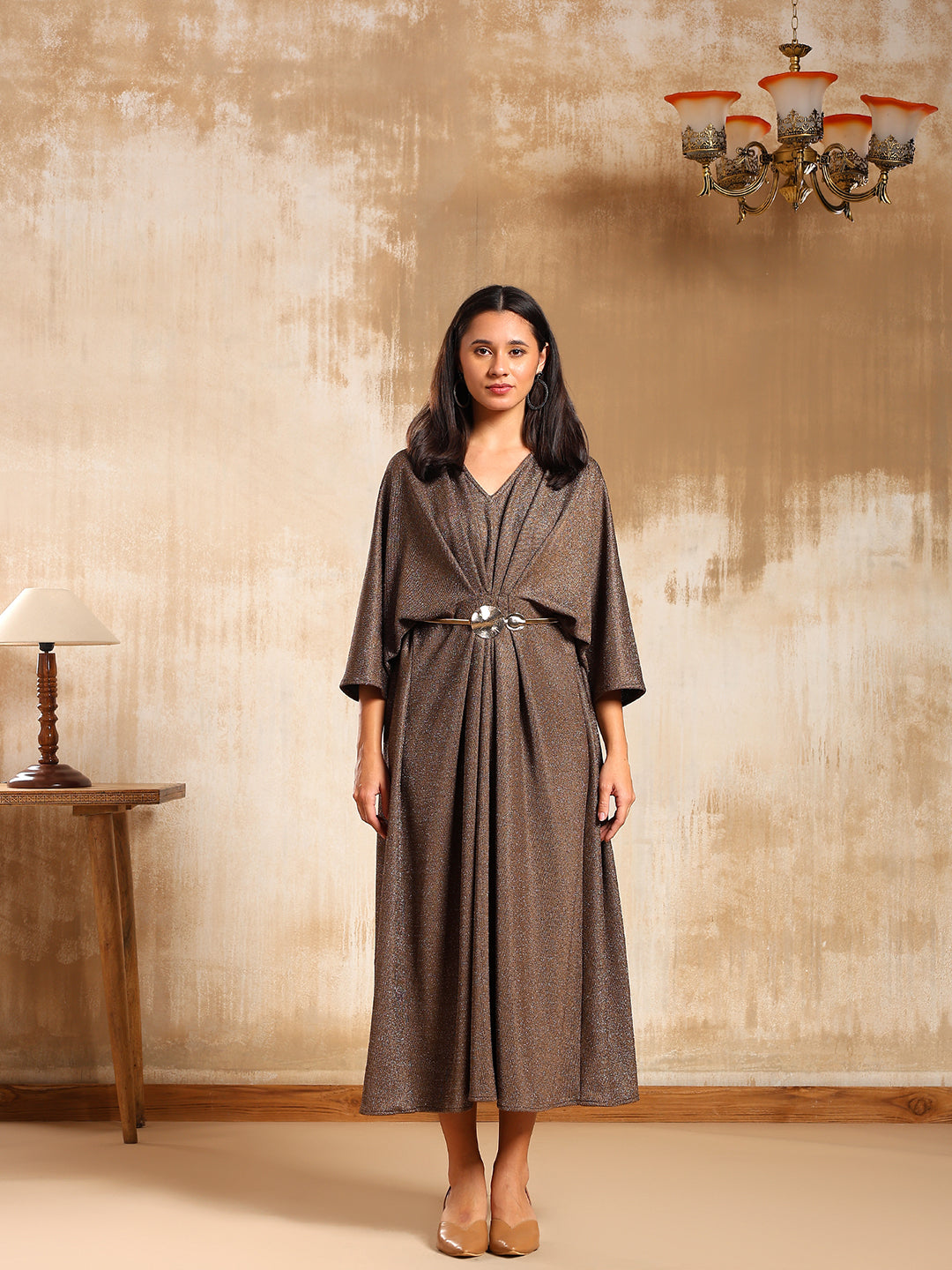
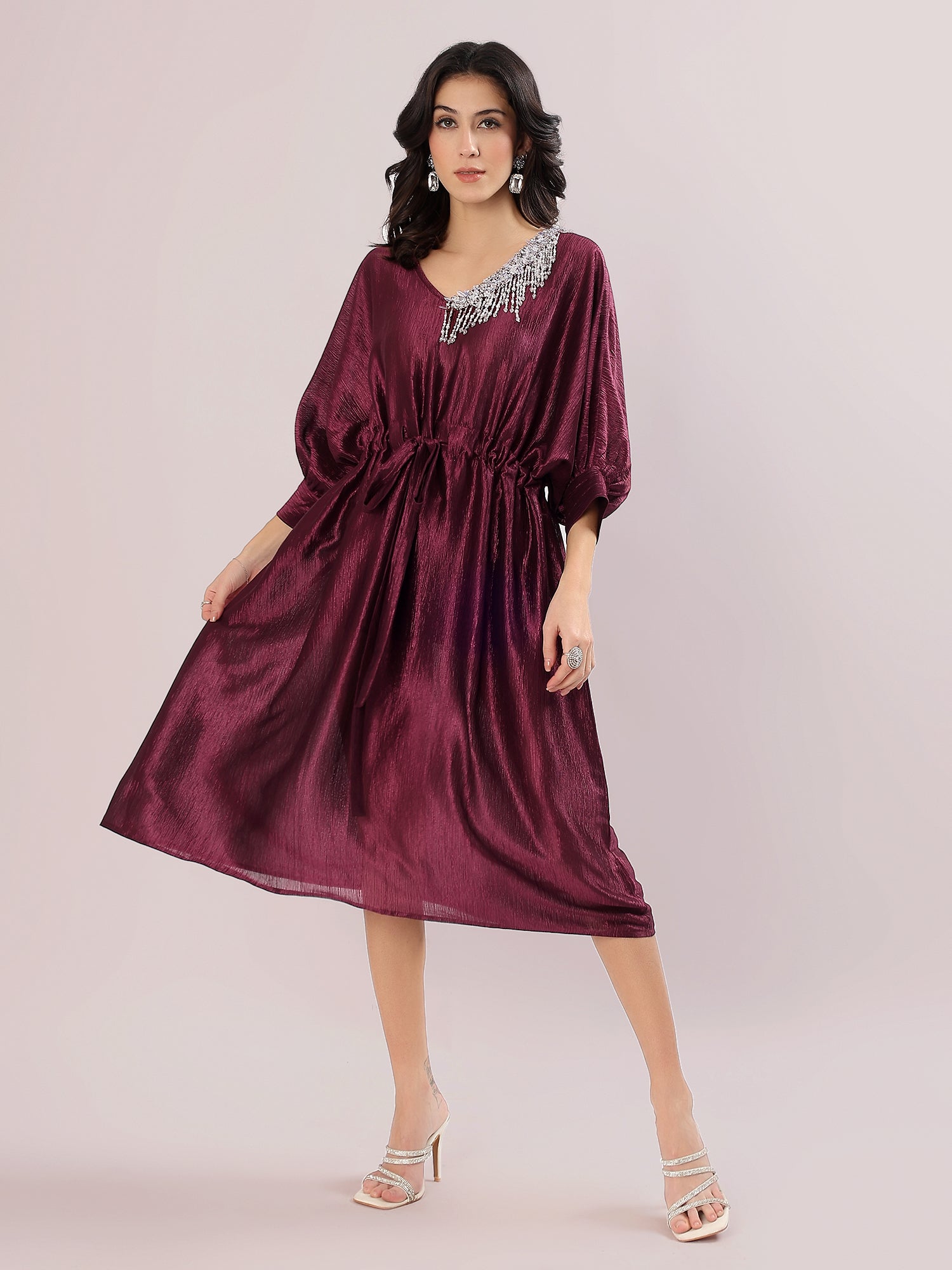
Deep green, burgundy, navy, plum, chocolate brown, and other rich shades can work beautifully. Satin and embellished fabrics also make more sense for evening events.
A midi can still work, but a maxi or longer dress can give you a more formal look.
This is also a good time for statement earrings or a slightly bolder clutch. You don't need both to be dramatic.
Garden Wedding
Garden weddings are pretty, but they aren't always easy on clothing and footwear.
A flowing floral dress or printed midi fits the setting naturally. Lightweight fabrics are especially useful if the ceremony takes place during the afternoon.
Think about the ground before choosing your shoes.
Thin heels can sink into grass. Block heels, wedges, or flats are much easier if you'll be walking around outside.
Beach Wedding
For a beach wedding, movement matters.
A relaxed midi or maxi in a breathable fabric can work better than a heavily structured dress. Soft colours and lighter prints also suit the surroundings without making the outfit feel too casual.
Flat sandals or stable low heels are usually more practical on sand.
Also check how the dress behaves in wind. A very loose skirt can become difficult to manage near the water.
Hotel or Formal Wedding
A hotel ballroom gives you more freedom to dress up.
A satin maxi, polished midi, structured dress, or elegant embellished style can all work depending on the invitation.
If the dress code says formal, your everyday cotton dress probably isn't the right choice.
You don't need to cover yourself in jewellery either. A well-fitted dress, good shoes, a clutch, and one noticeable jewellery piece can be enough.
Courthouse or Intimate Wedding
Small weddings don't always need a dramatic outfit.
A clean midi, wrap dress, tailored silhouette, or simple occasion dress can feel more natural for an intimate ceremony.
If the couple is having lunch or dinner afterward, choose something that can easily move from the ceremony to the rest of the day.
What to Wear to an Indian Wedding as a Guest
Indian weddings can be very different from one another.
A large traditional wedding may have several functions and strong expectations around clothing. A city wedding at a hotel may be much more relaxed about western dresses.
A western dress can work especially well for an engagement, cocktail evening, reception, or modern fusion wedding.
For a mehendi, colour and comfort usually matter more. A bright midi, printed dress, or flowing silhouette can work nicely.
The sangeet is different again. You'll probably be moving, dancing, sitting, and taking plenty of photos, so choose something that stays comfortable when you move.
For the main wedding ceremony, look at the venue and invitation. If the family has requested traditional or festive clothing, a fusion outfit may make more sense than a completely western look.
There isn't one outfit that works for every Indian wedding.
Wedding Guest Dress Ideas by Wedding Function
Engagement Party
An engagement is usually a little easier to dress for than the wedding itself.
For an evening event, try a satin midi, cocktail dress, wrap style, or dress with subtle embellishment.
For a daytime engagement, softer colours and lighter fabrics can keep the outfit fresh.
Mehendi Function
Mehendi functions tend to be colourful and relaxed.
A bright dress, floral print, flowing midi, or comfortable maxi can work well.
One practical point often gets overlooked. Make sure the sleeves and wrists aren't so restrictive that you're uncomfortable while getting mehendi applied.
Sangeet
The sangeet is where movement really matters.
Choose something you can dance in without constantly pulling at the hem or neckline. A midi or comfortable maxi can work well.
Sequins, metallic details, jewel tones, and statement earrings are all options for an evening sangeet. Just don't put every statement element into one outfit.
Wedding Ceremony
For the ceremony, consider the setting first.
A modern hotel ceremony may suit a polished midi or maxi dress. A traditional ceremony may call for something more festive or fusion-oriented.
Keep the overall look celebratory, but avoid intentionally making it look bridal.
Wedding Reception
The reception is usually the easiest function for a dressier outfit.
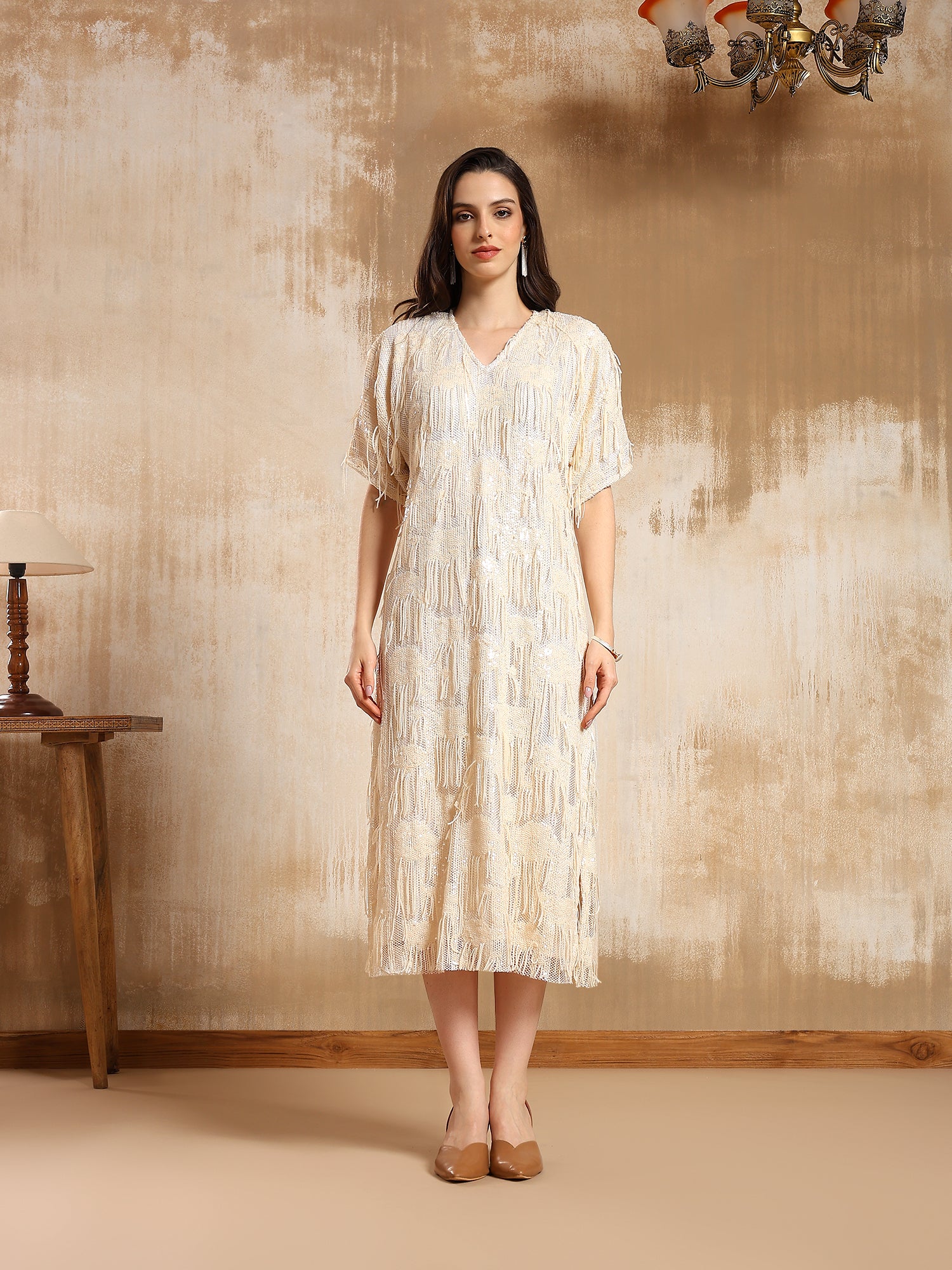
A satin dress, embellished midi, metallic style, or elegant maxi can work depending on the dress code.
For an evening reception, deeper colours and statement jewellery can make a simple silhouette feel much more dressed up.
Best Dress Lengths for Wedding Guests
There isn't a fixed dress length for every wedding.
Mini Dresses
A mini can work for a modern cocktail party, engagement, or smaller celebration.
Check the venue and invitation before choosing one for a more traditional wedding.
Knee-Length Dresses
Knee-length dresses can be practical for daytime functions and relaxed celebrations.
They're also easy to pair with flats or low heels.
Midi Dresses
Midi dresses are probably the most flexible option.
They can look casual with simple accessories or quite formal with satin fabric, heels, jewellery, and a clutch.
Maxi Dresses
Maxi dresses work well for beach weddings, evening receptions, and festive events.
The fabric makes a big difference. A cotton maxi feels very different from a sequined or satin one.
Floor-Length Dresses
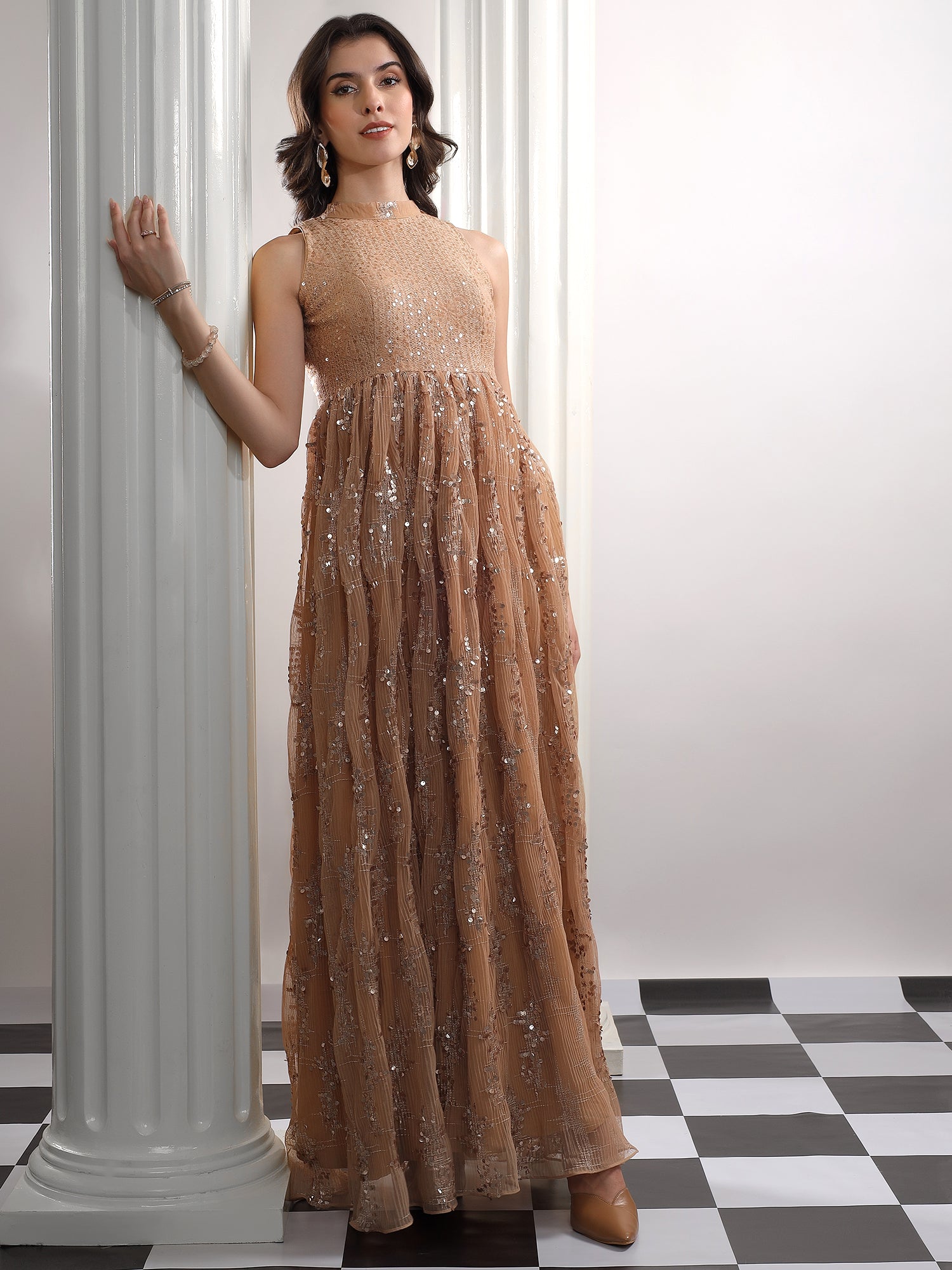
Floor-length styles usually make more sense for formal evening events.
If you're wearing one, check the hem with your actual shoes before the wedding.
Best Fabrics for Wedding Guest Dresses
Satin
Satin catches light beautifully and works particularly well for evening functions.
It can look polished without needing a lot of embellishment.
Chiffon
Chiffon is lightweight and moves easily.
It's a useful option for daytime weddings and warmer weather.
Crepe
Crepe usually gives a clean, smooth drape.
It's a good choice if you like simple silhouettes without too much decoration.
Georgette
Georgette has a soft texture and works nicely for flowing dresses.
It can be comfortable for longer wedding functions when the weather isn't too hot.
Organza
Organza has more structure.
It's useful for fuller sleeves, skirts, and dresses where you want some shape rather than a completely fluid silhouette.
Lace
Lace adds texture without needing a bold print.
You can use it as a small detail or choose an all-over lace dress for a more formal event.
Velvet
Velvet is rich and warm.
Save it for cooler weather, especially winter evening weddings. It can become uncomfortable very quickly during a hot outdoor function.
What Colours Should You Wear to a Wedding?
Pastels are an easy choice for daytime weddings.
Soft pink, lavender, powder blue, mint, peach, and similar shades can work well for garden and daytime functions.
For evening events, jewel tones are worth considering. Emerald, wine, navy, plum, deep teal, and burgundy can all give a dress more presence.
Neutrals work too. Beige, taupe, champagne, brown, and soft grey can be dressed up with jewellery and shoes.
Metallic shades are usually easier to carry at evening events.
Black can also work for many modern Indian weddings, especially cocktail parties and receptions. Still, cultural expectations vary, so check the invitation and setting.
White and ivory need a little more care. If the bride is wearing either shade, choose something else unless the couple has specifically said guests can wear white.
What Colours Should Wedding Guests Avoid?
There isn't one colour rule that applies to every wedding.
The safest approach is to avoid a colour that is clearly associated with the bride.
That may be white or ivory at one wedding. At another, the couple may have chosen a completely different colour palette for their ceremony.
Also check whether guests have been asked to wear a particular colour for the sangeet, mehendi, or another function.
The goal is simple. Don't intentionally compete with the bride, and don't ignore a colour request made by the couple.
How to Style a Wedding Guest Dress
Jewellery should work with the dress, not fight it.
A simple satin midi can handle statement earrings quite easily. If the dress already has heavy embellishment, a smaller pair of earrings may look cleaner.
The same goes for necklaces and bracelets. You don't need a necklace, large earrings, multiple bracelets, and a bold ring all at once.
Shoes should match the venue.
For grass, block heels are usually more practical. For a hotel reception, sleek heels can work well. For a beach wedding, comfortable sandals may make much more sense.
A small clutch or handbag is usually enough.
If the event runs late and the weather gets cooler, add a light jacket, shrug, or shawl that works with the dress.
Also Read: How to Choose a Wedding Dress: A Complete Guide to Finding Your Perfect Dress
Wedding Guest Dresses for Different Seasons
Spring Weddings
Spring is a good time for florals, soft colours, lighter fabrics, and flowing silhouettes.
If the temperature changes during the day, carry a light layer.
Summer Weddings
Indian summer weddings need breathable clothing.
Lightweight dresses with some room to move are generally easier than heavy, layered outfits.
If you're attending an outdoor event, think about sun exposure too.
Monsoon Weddings
Monsoon dressing needs practical choices.
A midi can be easier than a floor-length dress if the venue has outdoor areas. Choose footwear that gives you stability on wet surfaces.
Very long hems can become a nuisance around puddles and damp ground.
Autumn Weddings
Autumn gives you more flexibility.
You can start bringing in richer colours and slightly heavier fabrics, especially for evening celebrations.
Winter Weddings
Winter is the time to bring out velvet, heavier fabrics, long sleeves, and elegant layers.
For an evening wedding, deep colours and richer textures work especially well.
What to Wear to a Wedding Based on the Dress Code
|
Dress Code |
Good Options |
Styling Direction |
|
Casual |
Midi, knee-length or relaxed maxi |
Simple jewellery and comfortable footwear |
|
Smart Casual |
Wrap dress, midi or polished day dress |
Dressy flats or low heels |
|
Cocktail |
Cocktail dress, midi or refined mini |
Statement earrings and heels |
|
Semi-Formal |
Midi, maxi or elegant occasion dress |
Polished jewellery and clutch |
|
Formal |
Maxi or floor-length dress |
Dressier shoes and refined accessories |
|
Black Tie |
Floor-length evening dress |
Formal jewellery, clutch and heels |
If the dress code is unclear, use the venue and timing as extra clues.
A cocktail dress at a luxury hotel reception will usually be styled more formally than the same dress at an afternoon garden celebration.
Wedding Guest Dresses for Different Body Preferences
There's no need to follow strict body-shape rules when choosing a wedding guest outfit.
If you like fitted clothing, wear it.
If you prefer a relaxed dress, choose that instead. Comfort can make a bigger difference to how you look and carry yourself than following a prescribed silhouette.
For waist definition, try a wrap dress or a style with a clear waist seam.
For more movement, A-line and flowing dresses are worth trying.
Straight-cut dresses work well when you prefer a cleaner shape.
The better question is not what you're supposed to hide. Think about what you like seeing when you look in the mirror.
How to Choose a Wedding Guest Dress You Can Wear Again
A good occasion dress doesn't need to be a one-time purchase.
Solid colours are usually easier to restyle. A black, navy, burgundy, or deep green midi can work for a wedding, birthday dinner, festive event, or holiday evening.
Change the accessories and the same dress can look quite different.
Wear statement earrings and heels for a reception. Later, pair the dress with simple jewellery and a smaller everyday bag for dinner.
Removable layers help too.
A dress that works with a blazer, jacket, shrug, or shawl gives you more options than a highly specific one-event outfit.
Before buying, ask yourself one practical question: Can I see myself wearing this again?
Wedding Guest Outfit Mistakes to Avoid
Ignoring the Dress Code
The invitation is there for a reason. Use it.
Choosing Uncomfortable Footwear
You'll probably be standing and walking more than you expect.
Overdressing for a Casual Event
A heavily embellished floor-length gown can feel out of place at a relaxed daytime function.
Underdressing for a Formal Reception
An everyday cotton dress may not be enough for a formal evening reception.
Wearing Something That Restricts Movement
Try sitting, walking, and raising your arms before deciding.
Ignoring the Weather
A heavy dress in July can become uncomfortable very quickly.
Carrying Too Many Accessories
Choose one or two pieces to stand out.
Forgetting the Venue
Sand, grass, stairs, and long walks all change what works.
Wearing Something Too Bridal
You want to look dressed for the celebration without looking like you're trying to take the bride's place.
How to Build a Wedding Guest Look From One Dress
Keep the formula simple:
Dress + Shoes + Jewellery + Bag + Hair + Optional Layer
Daytime Garden Wedding
Start with a floral midi.
Add block heels or flats, small earrings, and a compact handbag. Keep your hair comfortable and avoid heavy layers if it's warm.
Evening Reception
Try a satin or embellished midi.
Add statement earrings, sleek heels, and a small clutch. A deeper colour can instantly make the outfit feel more evening appropriate.
Indian Cocktail or Sangeet
Choose a colourful party dress with metallic or embellished details.
Add statement earrings and comfortable heels. You'll want enough room to move if dancing is part of the evening.
Wedding Guest Dresses From Onto By Aanchal
Once you've worked out the type of wedding you're attending, choosing a dress becomes much simpler.
The party wear collection is a useful starting point for wedding celebrations, evening events, and other occasions where you want something more dressed up.
For a more formal reception or luxury evening event, the Luxe Collection includes dresses, co-ords, and saree styles that can work across different levels of occasion dressing.
If the invitation says cocktail, the cocktail party dresses collection is more focused on shorter and evening-ready silhouettes.
For something softer and more fluid, take a look at the pleated dresses. Pleated styles can be useful when you want movement without going for a very loose silhouette.
You can also browse maxi dresses when you're dressing for a formal reception, beach wedding, or another event where a longer hem makes sense.
The important part is to decide what the event actually requires before shopping. Once you know the venue, timing, dress code, and weather, you can focus on finding something you genuinely like wearing.
Final Thoughts
Choosing a wedding guest outfit doesn't have to start with a trend.
Start with the wedding type, venue, dress code, time of day, and season. Then think about the length, fabric, colour, shoes, jewellery, and comfort.
Indian weddings give you even more to consider because the mehendi, sangeet, ceremony, engagement, and reception may all have different expectations.
Most importantly, wear something that still feels like you.
The right wedding guest dress should look appropriate for the celebration, but it should also let you sit, walk, eat, dance, and enjoy yourself without constantly adjusting your outfit.
Frequently Asked Questions
1. What should I wear to a wedding as a guest?
Check the venue, time, dress code, and type of function first. A midi, maxi, cocktail dress, or polished occasion dress can work depending on those details.
2. What dress is appropriate for an Indian wedding guest?
It depends on the function. Bright dresses can work well for mehendi events, while polished midi, maxi, cocktail, or fusion styles may suit receptions and evening functions.
3. Can I wear a western dress to an Indian wedding?
Yes. Western dresses can work well for engagements, cocktail events, receptions, and modern weddings. For a traditional ceremony, consider the venue and family's expectations.
4. What colour dress should a wedding guest wear?
Pastels and floral shades often work well during the day, while jewel tones and deeper colours suit evening events. Always check whether the couple has requested a specific colour.
5. Can wedding guests wear white or off-white?
It depends on the couple and cultural setting. If white or ivory is being worn by the bride, choosing another colour is usually the safer option unless guests have been told otherwise.
6. What should I wear to a daytime wedding?
Lightweight fabrics, floral prints, soft colours, midi dresses, and comfortable shoes are good starting points. Outdoor venues also require practical footwear.
7. What should I wear to an evening wedding reception?
A satin midi, maxi, embellished dress, or polished evening dress can work well. Add dressier jewellery, heels, and a clutch if the event is formal.
8. What should I wear to a cocktail wedding?
A cocktail dress, refined midi, elegant mini, or structured evening dress can work. Statement earrings and dressier shoes can finish the outfit without making it look overdone.


