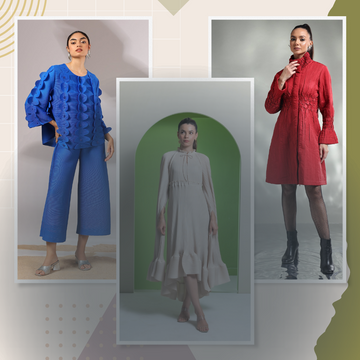
Tropical Whisper-SS'26
Tropical Dresses — Hawaiian Prints, Floral Cuts & Resort Styles for Women
A tropical dress isn't just a garment — it's a particular kind of confidence. The kind you feel when the fabric is light enough that the sea breeze moves through it, when the print is loud enough to match your mood, and when the silhouette is forgiving enough that you stop thinking about how you look and start thinking about where you're going.
The category has grown significantly over the last few years in India. Goa trips, Maldives honeymoons, Kerala backwater escapes, Thai island vacations — and closer home, rooftop brunches, poolside parties, sunset happy hours in Rajasthan — have made tropical dresses a genuine wardrobe necessity rather than a vacation novelty. The demand isn't seasonal anymore. It's a year-round category, especially in cities where the sun rarely takes a break.
What most buyers run into, though, is a frustrating gap in the market. The options tend to split into two extremes: mass-produced resort wear made from synthetic fabrics that trap heat and photograph poorly, or luxury occasion wear that's too precious to actually wear near sand or salt water. The middle ground — well-constructed tropical dresses that are genuinely wearable, wash-and-wear practical, and thoughtfully sized for Indian body proportions — is hard to find.
This collection at Onto by Aanchal was built from that specific need. The silhouettes here — maxi lengths, midi cuts, wrap styles, off-shoulder designs — are chosen because they work on real bodies in real tropical climates, not just on six-foot models in air-conditioned studios. The prints draw from traditional Hawaiian motifs, bold botanical illustration, Polynesian geometric patterns, and softer floral arrangements that sit somewhere between resort and garden party.
Whether you're building a packing list for a beach vacation, need something specific for a Hawaiian theme party, or are simply done wearing the same kurtas to every casual occasion — this is a good place to start. The sections below cover fabric considerations, how to size yourself correctly, styling approaches for different occasions, and what separates a dress that photographs well from one that also feels good to wear all day.
UNDERSTANDING THE COLLECTION
Tropical dresses sit at the intersection of three distinct clothing traditions: Hawaiian aloha wear (which itself evolved from early 20th-century influences mixing Japanese kimono prints with American shirt-making), Polynesian resort fashion, and mainstream Western summer dressing. What makes them recognizable is the print vocabulary — hibiscus, bird of paradise, monstera leaves, palm fronds, pineapples, sea turtles, and sometimes abstract geometric arrangements inspired by Pacific island cultures.
In Indian fashion contexts, this vocabulary has been enthusiastically absorbed and adapted. Floral tropical prints layer well over India's existing comfort with bright colour, and the ease of a maxi dress translates naturally for women who are already accustomed to full-length silhouettes. The result is a category that feels both international and intuitively accessible.
The Onto by Aanchal tropical collection specifically divides into a few functional groups:
•Maxi tropical dresses — floor-length silhouettes best suited for beach walks, resort dinners, and day-to-evening transitions
•Midi tropical dresses — calf-length cuts that offer more versatility across occasions, from a day trip to a semi-formal dinner
•Wrap-style tropical dresses — adjustable tie-front designs that accommodate a wider range of body types and are practical for travel
•Off-shoulder and halter tropical styles — suited for beach or pool events where showing more skin is appropriate
•Hawaiian theme dresses — dresses specifically designed around traditional aloha aesthetics, useful for themed events and parties
FEATURES AND BENEFITS
Fabric Considerations
The most important decision in a tropical dress isn't the print — it's the fabric. In humid tropical conditions (coastal India, beach destinations, monsoon-adjacent weather), your choice of material determines comfort level across an entire day.
Rayon and viscose are the most common base fabrics in this category. Both are lightweight and breathable, drape beautifully for photographs, and carry prints with excellent colour fidelity. The difference: rayon is slightly more durable and holds its shape better after washing, while viscose has a softer hand-feel but can become clingy in high humidity. Either works well; it comes down to preference.
Cotton-blend tropical dresses sacrifice some of the fluid drape of rayon for better durability and easier maintenance. If you're buying for a vacation where the dress will be worn multiple times, hand-washed quickly, and dried in the sun, a cotton blend is more forgiving.
Georgette and chiffon tropical styles photograph exceptionally well — the fabric catches light and creates movement — but require more careful handling and aren't ideal for active days that involve sand, swimming, or extended walking.
Construction and Finishing
Look for flat-lock seaming on tropical dresses you plan to wear for extended periods. Flat seams don't create pressure points or irritate skin, which matters when the dress is your only layer. Reinforced stitching at stress points — armholes, waistbands, wrap ties — is an indicator of a dress built to actually last through a full vacation rather than just one photo shoot.
Quality tropical print application uses reactive or digital printing processes that bond dye into the fabric rather than sitting on the surface. The practical test: run a damp cloth over the inside of the print before purchasing. Surface printing shows colour transfer; reactive printing doesn't.
HOW TO CHOOSE THE RIGHT TROPICAL DRESS
By Occasion
Beach vacation — A maxi tropical dress in rayon or viscose is the most practical choice. It covers you for the walk to the beach, transitions to dinner, and looks intentional rather than like you forgot to change. Choose prints with high contrast — deep backgrounds with bright botanical motifs — since they photograph better in strong natural light.
Hawaiian or tropical theme party — This is the one context where you can lean fully into the aloha aesthetic: large hibiscus prints, bold colour blocking, matching sets if the event is daytime. The rule of thumb: theme events reward commitment. A half-hearted tropical print looks underdressed; a full-on Hawaiian print dress looks like you understood the assignment.
Resort or pool event — Choose a dress with built-in adjustability (wrap styles, drawstring waists) so it works over a swimsuit or as a standalone. Midi length is most versatile for this purpose — long enough to look intentional, short enough that it doesn't drag on wet surfaces.
Day trip or sightseeing — Comfort takes priority. A cotton-blend tropical midi dress with pockets (always worth checking for) is the practical choice. You'll be walking, sitting, possibly in and out of air-conditioned spaces. Avoid extremely sheer fabrics for these contexts.
By Body Type
Wrap dresses are the most body-type-inclusive silhouette in the tropical dress category. The tie-front construction lets you adjust the fit at the waist, the V-neckline creates a lengthening line, and the skirt portion can be wrapped to different degrees depending on how much leg you want to show. If you're uncertain which style to choose, start here.
For fuller figures, maxi dresses with empire waists or defined waistbands in tropical prints work better than unstructured shifts. The waist definition creates proportion; the length creates elegance. Avoid very small, all-over repeat prints — they can visually flatten a silhouette.
For petite frames, midi lengths or structured maxis with vertical print elements (think palm trees, vertical stripes incorporated into a tropical motif) add visual height. Avoid extremely voluminous skirts without waist definition — they can overwhelm a smaller frame.
By Print Scale
Large-scale prints — oversized florals, big botanical leaves — read better in photographs and at a distance. They suit confident wearers and work especially well for events where you want to make an impression.
Small-scale repeat prints — smaller hibiscus patterns, tiny leaf repeats — are more versatile for day-to-day wearing and suit petite frames or those who want the tropical feeling without the maximum visual impact.
QUALITY AND CRAFTSMANSHIP
Indian consumers buying tropical dresses online face a specific challenge: the category is flooded with fast-fashion imports, primarily from Chinese manufacturers, that are photographed beautifully but sized for non-Indian proportions and constructed from materials that don't hold up past a few wears.
The quality indicators worth checking before purchasing:
• Fabric weight — lightweight doesn't mean insubstantial. Good tropical dress fabric should have enough body that it doesn't become transparent in bright sunlight, but light enough to breathe in heat. Ask for fabric weight in GSM if purchasing online from a responsive seller.
• Colour consistency — the print on a quality tropical dress should be consistent across the entire garment, with no fading at seams or variation in background colour. Check product images closely, particularly around the waistband and hem.
•Sizing accuracy — measure your actual bust, waist, and hip, then compare against the brand's size chart. Indian brands like Onto by Aanchal that manufacture for the domestic market are more likely to have sizing appropriate for Indian proportions than international imports.
• Return and exchange policy — if a brand offers no returns on printed garments, that's worth noting. Confidence in quality correlates with willingness to accept returns.
WHO THIS COLLECTION IS BEST FOR
The honest answer is that tropical dresses serve a broad audience — but the specific version of that answer matters for buying decisions.
Vacation packers who want a single garment that can handle beach, dinner, and in-between moments without requiring a full change of outfit. A good tropical maxi dress is the most efficient piece of clothing you can pack for a coastal vacation.
Theme party attendees who need something that reads clearly as 'tropical' or 'Hawaiian' without requiring a full costume. A Hawaiian print dress is festive enough to commit to the theme, wearable enough that it doesn't feel like fancy dress.
Women building a warm-weather wardrobe who are tired of the same options — particularly those who find most Indian occasion wear too formal for casual vacations and most Western resort wear too ill-fitting for Indian body types.
Gift shoppers looking for something more thoughtful and wearable than standard gifting categories. A well-chosen tropical dress — particularly a wrap style that accommodates size variation — is a practical gift for a friend going on a beach trip.
BUYING CONSIDERATIONS
Common Mistakes
Buying too small — Tropical dresses, especially wrap styles, are often bought in a smaller size because buyers want a fitted look. The result is a dress that's uncomfortable to wear all day and photographs poorly because the fabric is pulling at stress points. Size up if you're between sizes.
Prioritising print over fabric — A beautiful print on a bad fabric is still a bad dress. If the material is scratchy, holds static, or doesn't breathe in heat, you won't wear it. Read fabric descriptions carefully and, where possible, check fabric weight.
Ignoring the occasion — A full aloha-print maxi dress is perfect for a Hawaiian theme party and slightly out of place at a corporate team offsite with a 'smart casual tropical' dress code. Consider the actual occasion, not just a general category.
Long-Term Value
A good tropical dress, properly cared for, should last multiple vacation seasons. The care is straightforward: hand-wash or gentle machine cycle in cold water, dry in shade rather than direct sun (which fades reactive prints over time), and store flat or hung rather than folded to prevent permanent crease lines in the print.
INDUSTRY INSIGHTS
The tropical dress market in India has followed an interesting trajectory. Until around 2018, the category was almost exclusively a tourist-facing product — dresses sold in Goa markets and Kovalam beach shops to domestic tourists who wanted a souvenir. The rise of Instagram travel culture changed this: seeing well-styled tropical dresses in content from Bali, the Maldives, and Goa created demand for quality options that could be purchased before the trip rather than as an afterthought during it.
The Bollywood beach vacation aesthetic — large sunglasses, a flowy printed maxi, minimal jewellery — has also significantly normalised tropical dressing as a category that has nothing to do with actually being on a beach. Rooftop brunches, destination birthday parties, even some weddings with beach or garden settings now have tropical dress codes that would have been unusual a decade ago.
For buyers in tier-2 Indian cities, the category is almost entirely an online purchase. The absence of physical retail in these markets makes fit and sizing accuracy especially important — returns and exchanges on online fashion are improving but still represent friction that most buyers prefer to avoid.
One useful thing to know: 'tropical dress code' in event contexts usually means something specific and slightly different from 'Hawaiian theme dress code.' Tropical dress codes typically accept any bright, warm-weather print — florals, abstract botanicals, even solid bright colours — while Hawaiian theme specifically calls for aloha-print fabrics. If you're attending an event, it's worth clarifying which category the invitation actually means.
HOW TO STYLE A TROPICAL DRESS FOR A BEACH VACATION
The styling challenge with a tropical dress on vacation is that you need it to work across a wide range of contexts — beach in the morning, sightseeing in the afternoon, dinner in the evening — often without returning to your accommodation to change.
The approach that works best: build the outfit around the dress as the primary element and keep everything else minimal. A maxi tropical dress with flat strappy sandals, a lightweight tote that fits sunscreen and a hat, small gold or shell jewellery, and a pair of sunglasses covers the full arc of a beach day. For dinner, swap the flat sandals for low block heels and add a clutch — the dress itself doesn't need to change.
Hair is part of the equation. Tropical dresses are the rare garment that look equally good with carefully styled hair and with a wet bun straight off the beach. This is not accidental — the boldness of the print provides enough visual structure that the rest of the look has room to be relaxed.
For Indian skin tones specifically: tropical prints with warm-toned backgrounds — terracotta, mustard, deep orange, coral — tend to be particularly flattering. Cool backgrounds like certain shades of green or purple can work but are slightly less universally flattering. Prints with blue-green backgrounds inspired by ocean imagery tend to sit well across most Indian skin tones.
FREQUENTLY ASKED QUESTIONS
1. What is the difference between a tropical dress and a Hawaiian dress?
These terms overlap significantly but aren't identical. A Hawaiian dress (aloha dress) specifically refers to styles based on traditional Hawaiian aloha wear — typically a shirt-dress or sundress cut in aloha print fabric, which is characterised by a specific vocabulary of motifs including hibiscus, plumeria, monstera leaves, and sometimes traditional Hawaiian quilting patterns. Tropical dresses are a broader category that includes Hawaiian styles but also encompasses any dress with tropical-inspired prints — Polynesian geometric patterns, general botanical prints, palm motifs — in a range of silhouettes. All Hawaiian dresses are tropical dresses; not all tropical dresses are technically Hawaiian.
2. What fabrics are best for tropical dresses in Indian weather?
Rayon and viscose are the most practical choices for Indian tropical climates. Both are genuinely breathable, which matters in coastal and humid settings, and both carry prints with good colour saturation. Cotton blends work better if you need durability and wash-and-wear practicality over a long vacation. Avoid polyester-based tropical prints in hot and humid conditions — polyester traps heat and moisture, which becomes uncomfortable quickly.
3. How should I size a tropical dress if I'm between sizes?
Size up. Tropical dresses — particularly wraps and maxi styles — are designed to be worn with ease, not fitted against the body. A dress that is slightly loose flows better, photographs better, and is dramatically more comfortable in warm weather. If you're between a medium and a large, choose the large. If the brand has a waist tie or cinching element, you can always create definition with the waistband.
4. Can I wear a tropical dress to a semi-formal occasion?
Yes, with the right choices. A midi or maxi tropical dress in a refined floral print (think botanical illustration style rather than bold aloha repeat) with structured accessories — block-heeled sandals, a simple clutch, minimal gold jewellery — reads as smart-casual to semi-formal depending on the fabric quality. Avoid novelty prints (cartoon fruits, highly stylised motifs) for occasions that require some formality. Clean botanical florals or watercolour-style tropical prints are more versatile across formality levels.
5. Where can I buy tropical dresses online in India?
Several Indian brands and marketplaces carry tropical dresses, though quality varies considerably. Onto by Aanchal (ontobyaanchal.com) specifically builds the category for Indian proportions and Indian climate conditions. When evaluating any online option, prioritise sellers who provide accurate fabric descriptions, real customer photographs (rather than model-only images), and a sensible return policy.
6. What shoes work best with a tropical maxi dress?
Flat strappy sandals are the most versatile option — they work from beach to casual dinner and complement the relaxed nature of the silhouette. Block-heeled sandals or espadrilles elevate the look for evening occasions without requiring the full formality of a stiletto. Avoid chunky platform sneakers or sports sandals unless the styling is deliberately casual.
7. How do I care for a tropical print dress to prevent fading?
Cold water washing is the most important step — warm or hot water accelerates colour fading in reactive and digital prints. Dry in shade rather than direct sunlight for the same reason. Turn the dress inside out before washing, either by hand or on a gentle machine cycle. Store hanging rather than folded to prevent permanent crease marks in the print, which are difficult to remove once set.
8. What is a tropical dress code for a party or event?
A tropical dress code typically asks guests to wear bright, warm-weather clothing that evokes a tropical setting. This is broader than a Hawaiian dress code and usually accepts any vibrant floral, botanical, or tropical print in a casual-to-smart-casual silhouette. When in doubt, err toward a more vibrant print over a subdued one — understated choices at a tropical dress code event tend to read as not having made an effort.
9. What jewellery works with a tropical print dress?
The print is doing a lot of work visually, so jewellery should be simple and complementary rather than competing. Small gold hoops or simple drop earrings, a delicate chain necklace, or shell and natural material jewellery all work well. Avoid heavy statement necklaces that visually clash with a bold print. A single cuff bracelet or stacked minimal bangles add interest without overloading the look.
10. Are tropical dresses only suitable for beach vacations?
No — the category has moved well beyond its beach-exclusive origins. Rooftop events, garden parties, outdoor brunches, destination weddings in coastal or warm settings, and tropical theme events all provide appropriate contexts for tropical dresses. In many Indian cities, a well-chosen tropical midi dress is now a legitimate option for semi-casual social occasions year-round, not just during vacation season.
11. What is the difference between a tropical print maxi dress and a tropical print midi dress?
Length is the primary functional difference, but it carries real practical implications. Maxi dresses (floor-length) are more dramatic visually, provide more coverage, and transition more easily to evening settings. Midi dresses (calf-length) are easier to walk in, more versatile across occasions, and slightly more practical for active days. If you're buying one tropical dress for a trip, a midi is generally the more versatile choice; if you're building out the category in your wardrobe, start with a maxi for evenings and a midi for days.
12. Do tropical dresses work for women over 40?
Completely. The silhouettes most suited to a range of ages in this category are wrap maxis, empire-waist styles, and midi dresses with defined waistbands. These create structure and proportion rather than relying on youth or a very specific body type. The print choice matters more than age: botanical and floral prints with clean backgrounds tend to be more elegant, while very graphic or novelty prints skew younger. The styling approach — simple jewellery, quality sandals, minimal accessories — elevates a tropical dress for any age group.
13. How do I style a tropical dress for a Hawaiian theme party?
Go fully into the aesthetic. A bold aloha print — large hibiscus motifs, deep background colours like navy, black, or forest green with bright floral overlays — is the most recognisable signal that you've committed to the theme. Add a lei (available at most party supply stores), opt for flat strappy sandals or espadrilles rather than formal heels, and keep hair relaxed — loose waves, a low braid, or a floral hair clip. The event rewards a confident, complete interpretation of the theme rather than a hedged, semi-tropical approach.
14. What print styles are currently popular in tropical dresses?
A few directions have sustained popularity: oversized botanical prints with a vintage illustration quality (think detailed leaf and flower drawings rather than simplified graphic motifs), colour-blocked tropical designs that use the print as a secondary element within a larger colour story, and monochrome tropical prints — the same motifs rendered in tone-on-tone or black-and-white — for buyers who want the shape vocabulary without high visual contrast. Traditional aloha prints remain strong for themed occasions and have gained cultural appreciation beyond novelty.
15. Can a tropical print dress be worn in a professional setting?
In most conventional corporate environments, no. In creative industries, media, fashion, hospitality, and travel — yes, with the right styling. A structured tropical midi dress in a refined botanical print (watercolour florals, tonal leaf prints) with a blazer and classic accessories can work for a creative professional office on a casual day. The key is the print choice: refined and artistic tropical prints read differently from bold aloha patterns, and that distinction matters in professional contexts.